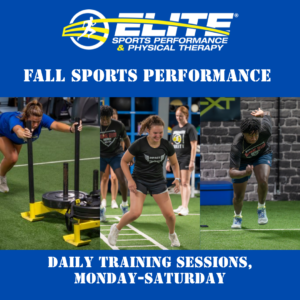
Helpful Tips for Fall Sports Injury Prevention
Tips for Helping Youth Athletes Stay Healthy All Season
As the fall sports season approaches, athletes are getting ready for soccer, football, field hockey, volleyball, cross country, and other competitive activities. Many have spent the summer training and preparing for the season ahead, while others may be coming in less prepared for the rigors of competitive sports. While sports provide tremendous physical and social benefits, the transition back to regular practices and games can also increase the risk of injury. The Physical Therapy team here at Elite has seen many fall sports seasons end prematurely due to injury.
The good news? Many youth sports injuries can be reduced with the right preparation.
Our Physical Therapy and Sports Performance teams here at Elite emphasize several simple strategies that can help young athletes—both male and female—build strength and power, improve movement quality and core stability, and stay healthy throughout the season.
Start the Season Gradually
One of the most common mistakes young athletes make is doing too much too soon. After a summer away from organized sports, jumping immediately into intense practices, conditioning, and competition can place excessive stress on muscles, tendons, joints, and bones. Gradually increasing training volume and intensity gives the body time to adapt.
Parents and athletes should pay attention to sudden increases in running, cutting, hopping, jumping, lifting, or practice time. Persistent pain, swelling, limping, or changes in performance should not simply be ignored – they should be heeded as warning signs of a possible injury and addressed accordingly.
Make Dynamic Warm-Ups Part of Every Practice
A dynamic warm-up should prepare the body for the movements it will perform during practice or competition.
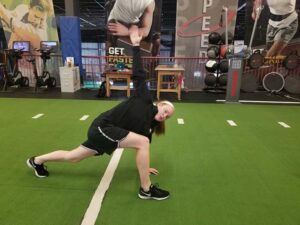 We recommend dynamic warm-ups that include movements such as:
- Light jogging or skipping
- Walking lunges
- Leg swings
- Squats
- Balance exercises
- Controlled jumping and landing drills
- Short acceleration and deceleration drills
- Sport-specific movement patterns
For athletes participating in sports that involve frequent jumping, cutting, and changes of direction, a more comprehensive neuromuscular warm-up can be particularly valuable. Evidence-based programs such as the FIFA 11+, Sportsmetrics, and PEP (Prevent Injury and Enhance Performance) programs have been shown to be effective in reducing injury risk. These multicomponent injury-prevention programs incorporate exercises such as strength training, plyometrics, agility, balance, and flexibility, along with feedback about movement technique.
Strength Training Is Injury Prevention Training
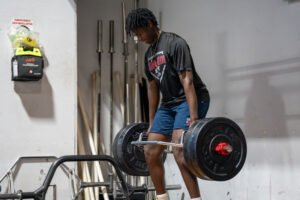 A comprehensive, well-designed strength and conditioning program will focus on functional movements and patterns that improve the strength of the following muscle groups:
- Quadriceps and hamstrings
- Glutes and hips
- Calves and ankles
- Core musculature
- Single-leg strength and stability
- Balance and coordination
- Upper body horizontal pulling and pushing movements (i.e. push ups, bench press, TRX rows)
- Upper body vertical pushing and pulling movements (i.e. pull ups, shoulder press)
The focus should be on proper technique and age-appropriate progression, not simply lifting heavier weights.
The sports performance coaches and PTs here at Elite will help determine which exercises and resistance levels are appropriate for an individual athlete.
Don’t Overlook ACL Prevention
ACL injuries are an important concern in youth sports, particularly in activities involving jumping, pivoting, cutting, and rapid changes in direction. Here are Elite, we seen dozens of promising seasons derailed by an ACL injury each season.
Research supports the use of multicomponent neuromuscular training programs to reduce noncontact ACL injuries. These programs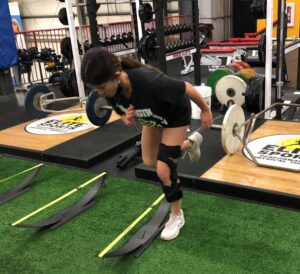 typically combine strength, plyometrics, agility, balance, and movement-technique feedback. As mentioned above, programs such as the FIFA 11+, Sportsmetrics, and PEP programs have good research to back them up and are well worth the time and effort.
Female athletes deserve particular attention because adolescent girls participating in certain high-risk sports have a substantially higher risk of ACL injury than their male counterparts. Prevention programs that include jumping and landing technique, balance, strength, and neuromuscular control can be especially valuable.
Male athletes can also sustain ACL injuries, along with ankle sprains, muscle strains, overuse injuries, and other sports-related problems. Research and athletic training recommendations support preventive training for male athletes as well.
The goal isn’t to give boys and girls completely different injury-prevention programs. Instead, prevention should be individualized according to the athlete’s sport, age, physical development, injury history, and movement patterns. Each new athlete that begins our Athlete Training program at Elite starts with a comprehensive Functional Movement Screen
Practice How to Land and Change Direction
“How you move” matters. The Elite staff frequently assesses how an athlete controls their body during single-leg activities, jumping, landing, stopping, and changing direction.
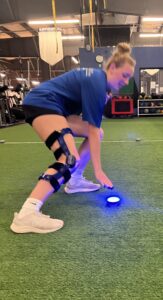 Youth athletes can benefit from learning to:
- Land with controlled knee and hip movement
- Absorb force through the hips, knees, and ankles
- Maintain good balance
- Control their body when slowing down
- Avoid uncontrolled knee collapse during landing
- Develop strength on both sides of the body
These skills should be practiced regularly—not only after an athlete gets injured.
Listen to Pain Instead of Playing Through It
Young athletes sometimes worry that reporting pain means they will lose playing time. Parents and coaches can help change that mindset.
Pain is information.
Muscle soreness after a new or intense workout can be normal, but persistent or worsening pain deserves attention. Pain accompanied by swelling, weakness, limping, loss of motion, or a change in how an athlete performs should be evaluated.
For growing athletes, pain that is localized directly over a bone can be especially important to address. The American Academy of Pediatrics recommends further evaluation of point tenderness over a bone in a growing child, even when swelling or movement limitations are minimal.
Early evaluation can often help identify a problem before it becomes a more significant injury.
Recovery Is Part of Training
Young athletes need time to recover. Adequate sleep, nutrition, hydration, and rest days all contribute to an athlete’s ability to train and compete safely. Late summer and early fall practices can also occur in hot and humid conditions, particularly early in the season, making hydration and appropriate heat-management strategies important.
Parents and coaches should watch for unusual fatigue, dizziness, headache, nausea, confusion, or other signs that an athlete may be struggling with the heat.
Previous Injuries Deserve Extra Attention
An athlete who has already sustained an injury may need a more individualized prevention plan.
A history of ACL injury, ankle sprain, concussion, stress injury, or other sports-related injury can influence how an athlete should prepare for a new season. The PTs and Sports Performance Coaches at Elite can help identify lingering strength, mobility, balance, or movement deficits and develop an appropriate return-to-sport or injury-prevention program.
A Healthier Fall Season Starts Before the First Game
Injury prevention doesn’t require an elaborate routine or hours in the gym. Consistency is often more important.
For young athletes, a strong fall-season foundation includes:
Warm up. Move well. Build strength. Increase training gradually. Recover. Speak up about pain.
Whether your athlete is a soccer midfielder, football running back, volleyball player, field hockey goalie, or cross-country runner, taking a proactive approach to injury prevention can help them stay healthy and enjoy the sport they love.
Is Your Athlete Ready for Fall Sports?
If your child is returning to sports after an injury, experiencing recurring pain, or you simply want to make sure they’re prepared for the demands of the upcoming season, a physical therapy evaluation or athlete assessment can help identify areas that may need attention.
How Elite Can Help!
The experienced team of expert Physical Therapists and Sports Performance Coaches at Elite are here to help! To learn more about Sports Physical Therapy at Elite, click HERE To schedule as Initial Evaluation with one of our PTs or give us a call at 781-436-9843 to schedule an assessment today!
If you’re interested in taking active steps to REDUCE injury risk AND improve your performance, our Sports Performance training sessions include many exercises and drills to help reduce injury risk throughout the body. Each 60-minute session includes a dynamic warm up, plyometric drills to improve power and jumping/landing mechanics, as well as strength training, speed training, and core stabilization and balance work to help improve athlete performance AND reduce injury risk. To learn more about our Sports Performance Training programs, visit HERE!
This article is intended for general educational purposes and is not a substitute for an individualized evaluation or medical advice.