
Understanding ACL Injuries, Risk Factors, and Risk Reduction
Understanding ACL Injuries: Prevalence, Risk Factors, and Biomechanical Solutions
An Anterior Cruciate Ligament (ACL) injury is one of the most devastating diagnoses a patient can receive. Beyond the immediate physical pain, it often means months of rehabilitation and physical therapy, missed seasons and opportunities, long-term risks like early-onset osteoarthritis, and increased psychological stress and challenges.
For the Physical Therapy team here at Elite, the upcoming fall sports season marks a predictable spike in these injuries. However, by understanding why these tears happen and how biomechanics influence knee safety, clinicians, coaches, and athletes can work together to
drastically reduce the risk.
The Rising Prevalence of ACL Tears
ACL injuries are a growing epidemic in youth, college and professional sports. Research indicates that hundreds of thousands of ACL tears occur annually in the United States alone, with a significant concentration among high school and collegiate athletes.
- The High-Risk Sports: The highest rates of ACL injuries occur in sports that require multi-directional movement, rapid deceleration, and pivoting. Soccer, basketball, football, and lacrosse top the list.
- The Non-Contact Phenomenon: A common misconception is that ACL tears happen due to collisions with other players (which they often do). However, roughly 70% to 80% of all ACL tears are non-contact injuries. They typically occur during rapid cutting maneuvers or awkward landings.
Identifying the Risk Factors
To prevent an injury, you must first understand who is at risk and why. ACL risk factors are generally categorized into two groups:
1. Non-Modifiable Risk Factors
These are baseline traits that an athlete cannot change:
- Anatomy: A narrower intercondylar notch (the groove where the ACL sits) or increased generalized joint laxity can elevate risk.
- Biological Sex: Female athletes face a 4 to 6 times higher rate of ACL tears than their male counterparts in comparable pivoting sports. This discrepancy is driven by a wider Q-angle (pelvic width relative to knee alignment), hormonal fluctuations that affect ligament laxity, and baseline structural differences.
2. Modifiable Risk Factors
These are movement flaws and physical imbalances that physical therapy can address and improve:
- Ligament Dominance: Relying on the knee ligaments rather than the lower body muscles to absorb the impact of jumping and cutting.
- Quad Dominance: Over-relying on the quadriceps (front of the thigh) with relative weak hamstrings and glutes (back of the thigh).
- Trunk Instability: An inability to adequately control the torso during lateral movements, which transfers excessive, unpredictable loads down to the knee joint.
Biomechanical Faults (And How to Fix Them)
When an athlete tears their ACL without contact, it is almost always the result of a biomechanical failure. By identifying these movement patterns, physical therapists can retrain the neuro-muscular system to help protect the knee.
Dynamic Valgus (inward collapse of knee)
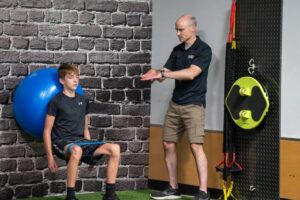
- The Fault: When landing from a jump or changing directions, the athlete’s knee buckles inward toward the midline of the body. This position places a high load of valgus stress and internal rotation on the knee, which can tear the ACL.
- The Biomechanical Fix: Build lateral hip strength and control by targeting the glute muscles and deep hip external rotators. Therapists use visual feedback and resisted band and other strengthening work (like lateral monster walks, banded walks, side planks, etc) to teach the central nervous system to keep the knees tracking directly over the second and third toes.
Sagittal Plane Mechanics
- The Fault: Landing with an upright posture, extended hips, and straight knees. A stiff landing forces the quadriceps to contract
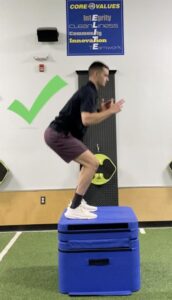 violently to keep the athlete upright. This quad pull creates an anterior tibial shear force—essentially pulling the shin bone forward out from under the thigh bone, straining the ACL.
 - The Biomechanical Fix: Teach “quiet & soft” landing mechanics. Athletes must learn to flex their hips, knees, and ankles simultaneously upon contact, transforming the lower glutes and hamstrings into shock absorbers. Soft, deep-angle landing drills reduce the anterior shear force dramatically.
Muscle Asymmetry (The Posterior Chain Deficit)
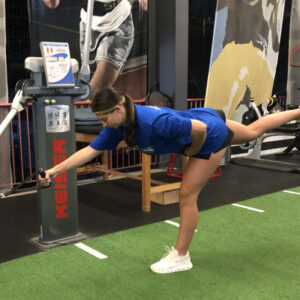
- The Fault: The hamstrings act as a functional antagonist to the quadriceps, meaning they naturally pull the tibia backward, protecting the ACL. If the hamstrings are weak relative to the quads, the knee loses its primary muscular shield.
- The Biomechanical Fix: Focused posterior chain strengthening. Incorporate eccentric hamstring training (such as Nordic hamstring curls), Romanian deadlifts, and single-leg glute bridges. Ensuring a balanced hamstring-to-quadriceps strength ratio is a non-negotiable metric for ACL safety.
The Role of Sports Physical Therapy
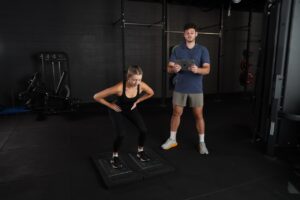
Preventing an ACL tear requires moving beyond traditional static stretching and generic leg presses. True injury reduction relies on neuromuscular training—teaching the brain to fire the right muscles at the exact millisecond an athlete cuts or lands. Here at Elite, we utilize comprehensive movement screenings, video analysis, and force plate testing to identify these biomechanical blind spots before the season begins. By correcting movement deficits in a controlled environment, we build resilient athletes who can play with confidence. Are you ready for the upcoming season? Contact our physical therapy team today to schedule a comprehensive sports movement screening and keep your knees protected all year long.
How Elite Can Help!
Have you or a family member recently suffered an ACL injury? If so, the experienced team of expert Physical Therapists at Elite are here to help! To learn more about Sports Physical Therapy at Elite, click HERE To schedule as Initial Evaluation with one of our PTs or give us a call at 781-436-9843 to schedule an assessment today!
If you’re interested in taking active steps to REDUCE the risk of an ACL injury, our Sports Performance training sessions include many exercises and drills to help reduce injury risk throughout the body, including knee injuries. Each 60-minute session includes a dynamic warm up, plyometric drills to improve power and jumping/landing mechanics, as well as strength training, speed training, and core stabilization and balance work to help improve athlete performance AND reduce injury risk. To learn more about our Sports Performance Training programs, visit HERE!