
Understanding Low Back Pain and Fear
Why Moving Matters More Than You Think
Low back pain is one of the most common reasons people visit a healthcare provider. If you’re dealing with it right now, you’re not alone — and more importantly, you’re not broken. Research published in the Journal of Orthopaedic & Sports Physical Therapy highlights something many people don’t realize: fear of pain can actually make back pain worse and last longer. Let’s break that down in a way that makes sense.
Pain Doesn’t Always Mean Damage
One of the biggest myths about back pain is that pain automatically means something is seriously wrong. In reality:
● Many people have disc bulges or “degeneration” on imaging and no pain at all.
● Others have significant pain with very little showing up on scans.
● The spine is strong, adaptable, and designed to move.
Pain is your body’s alarm system — but sometimes that alarm becomes overprotective.
The Fear–Avoidance Cycle
Here’s how fear can quietly keep pain going:
1. You feel pain.
2. You worry that movement will make it worse.
3. You avoid bending, lifting, twisting, or exercising.
4. Your muscles become weaker and stiffer.
5. Everyday movements start to feel harder.
6. Pain increases — which reinforces the fear.
This is called the fear-avoidance cycle. And it’s extremely common. The key thing to understand? Avoiding movement might feel protective in the short term, but long term it can slow recovery.
Your Back Is Stronger Than You May Think
Your spine is not fragile. It’s built to: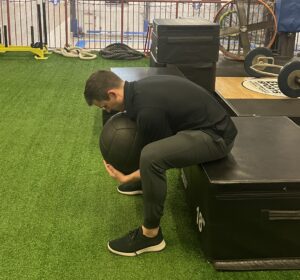
● Bend
● Twist
● Lift
● Carry
● Adapt to stress
Even if you’ve been told you have a “bulging disc” or “arthritis,” these findings are common — especially as we age — and often not dangerous. Pain does not automatically equal harm.
So What Actually Helps?
1️⃣ Education
Understanding how pain works reduces fear. When you realize that pain doesn’t always mean injury, your nervous system can start to calm down.
2️⃣ Gradual Movement
Instead of avoiding activity, we aim for graded exposure — slowly and safely building tolerance.
That might look like:
● Short walks
● Gentle bending practice
● Light strengthening exercises
● Gradually returning to activities you’ve been avoiding. Confidence builds as your body adapts.
3️⃣ Reassurance (the Right Kind)
You deserve to hear this:
● Your back is resilient.
● Movement is safe when progressed appropriately.
● Flare-ups don’t mean you’ve caused damage.
● Recovery is possible — even if pain has been present for a while.
What If I’m Still Afraid to Move?
That’s completely normal. Fear is not weakness — it’s a protective response. The goal isn’t to “push through” pain aggressively.
The goals are to:
● Move in ways that feel manageable.
● Build trust in your body again.
● Work with a provider who listens and explains.
The Big Takeaway
Low back pain isn’t just about muscles, discs, or joints. It’s also about how your nervous system interprets movement and threat.
When fear decreases:
● Confidence increases
● Movement improves
Pain often becomes more manageable. You are not fragile. You are adaptable. And with the right approach, you can move forward!
How Elite Can Help!
Are you or someone in your family dealing new or chronic back pain? If so, the experienced team of expert Physical Therapists at Elite are here to help! To learn more about Physical Therapy at Elite, click HERE! To schedule as Initial Evaluation with one of our PTs, give us a call at 781-436-9843 (Stoughton) to schedule an assessment today!
References:
1. Bunzli S, Smith A, Schütze R, O’Sullivan P. Making sense of low back pain and pain-
related fear. J Orthop Sports Phys Ther. 2017;47(9):628-636.
doi:10.2519/jospt.2017.7434