
Little League Shoulder
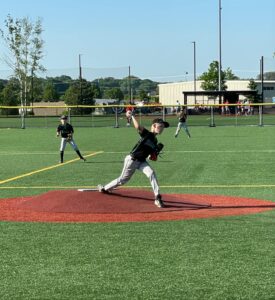 If your child plays baseball or softball —especially if they pitch—you may have heard terms like “Little League Elbow” but today let’s learn about “Little League Shoulder.” They sound similar, but they’re actually two different overuse injuries that affect growing athletes in different ways. Here’s a simple breakdown of what Little League Shoulder is, how it differs from Little League Elbow, and what you should know as a parent or coach.
What Is Little League Shoulder?
Little League Shoulder occurs when the growth plate at the top of the upper arm bone (the humerus) near the shoulder joint becomes irritated from too much throwing. In kids, growth plates of bones are weaker than muscles and tendons and as a result, repeated pitching and throwing can stress this area over time.
Common Signs
● Shoulder pain that slowly builds up
● Pain when throwing (especially pitching)
● Loss of throwing speed or accuracy
● Shoulder soreness that doesn’t go away with rest
What’s the Difference?
● Little League Shoulder = pain at the growth plate near the shoulder
● Little League Elbow = pain at the growth plate near the elbow
● Shoulder injuries are caused more by the rotational stress from throwing
● Elbow injuries are caused more about stress traveling down the arm.
Both are caused by overuse, not one bad throw.
Why Early Treatment Matters
Ignoring pain and “pushing through it” can make these injuries worse. Because growth plates are still developing, continuing to throw through pain can lead to longer recovery times or repeat injuries.
A proper evaluation looks at:
● How much your child or athlete is throwing (pitch counts)
● The types of pitches they are throwing
● Strength, range-of-motion, and flexibility
● Whole-body movement (hips, core, and shoulder—not just the arm)
How These Injuries Are Treated
Most kids recover well with the right plan:
● Complete rest from throwing for a period of time
● Visiting a Sports Physical Therapist who specializes in these injuries
● Exercises to improve strength and flexibility
● Fixing mechanics and building better full-body control
● A gradual return-to-throwing program once pain-free is crucial
Surgery is rarely needed when these injuries are caught early.
Prevention is the Real Win!
Both Little League Shoulder and Elbow are largely preventable. Key prevention strategies include:
● Adhering to age-appropriate pitch counts and rest guidelines
● Avoiding year-round pitching
● Encouraging multi-sport participation
● Strength and mobility training appropriate for youth athletes
● Listening to pain (soreness is not the same as sharp or lingering pain)
Bottom Line
Little League Shoulder and Little League Elbow are common, treatable, and often preventable injuries in young baseball and softball players. Early attention, proper rest, and smart training can keep kids healthy—and keep baseball fun! If your child has arm or elbow pain that isn’t going away, don’t ignore it. Getting checked early makes all the difference.
How Elite Can Help!
Are you or someone in your family dealing with an injury? If so, the experienced team of expert Physical Therapists and Sports Performance Coaches at Elite are here to help! To learn more about Physical Therapy at Elite, click HERE! To schedule as Initial Evaluation with one of our PTs, give us a call at 781-436-9843 (Stoughton) or 774-300-3529 (Foxboro) to schedule today!
References
1. Fleisig GS, Andrews JR. Prevention of elbow injuries in youth baseball pitchers. Sports Health. 2012;4(5):419-424.
2. Carson WG, Gasser SI. Little Leaguer’s shoulder: a report of 23 cases. Am J Sports Med. 1998;26(4):575-580.
3. Lyman S, Fleisig GS, Andrews JR, Osinski ED. Effect of pitch type, pitch count, and pitching mechanics on risk of elbow and shoulder pain in youth baseball pitchers. Am J Sports Med. 2002;30(4):463-468.
4. American Academy of Pediatrics Council on Sports Medicine and Fitness. Overuse injuries, overtraining, and burnout in child and adolescent athletes. Pediatrics.
2007;119(6):1242-1245.
5. American Sports Medicine Institute. Position statement for youth baseball pitching
injuries. American Sports Medicine Institute website.
6. Major League Baseball. Pitch Smart: youth baseball pitching guidelines. MLB website.
7. Reinold MM. Little League shoulder: what parents, coaches, and athletes should know.
Mike Reinold Blog. https://mikereinold.com.
8. Reinold MM, Wilk KE. Shoulder and elbow injuries in the throwing athlete: rehabilitation
and prevention strategies. Clin Sports Med. 2013;32(4):721-735.
9. Wilk KE, Macrina LC, Fleisig GS, et al. Deficits in glenohumeral passive range of motion
increase risk of shoulder injury in professional baseball pitchers. Am J Sports Med.
2015;43(10):2379-2385.